
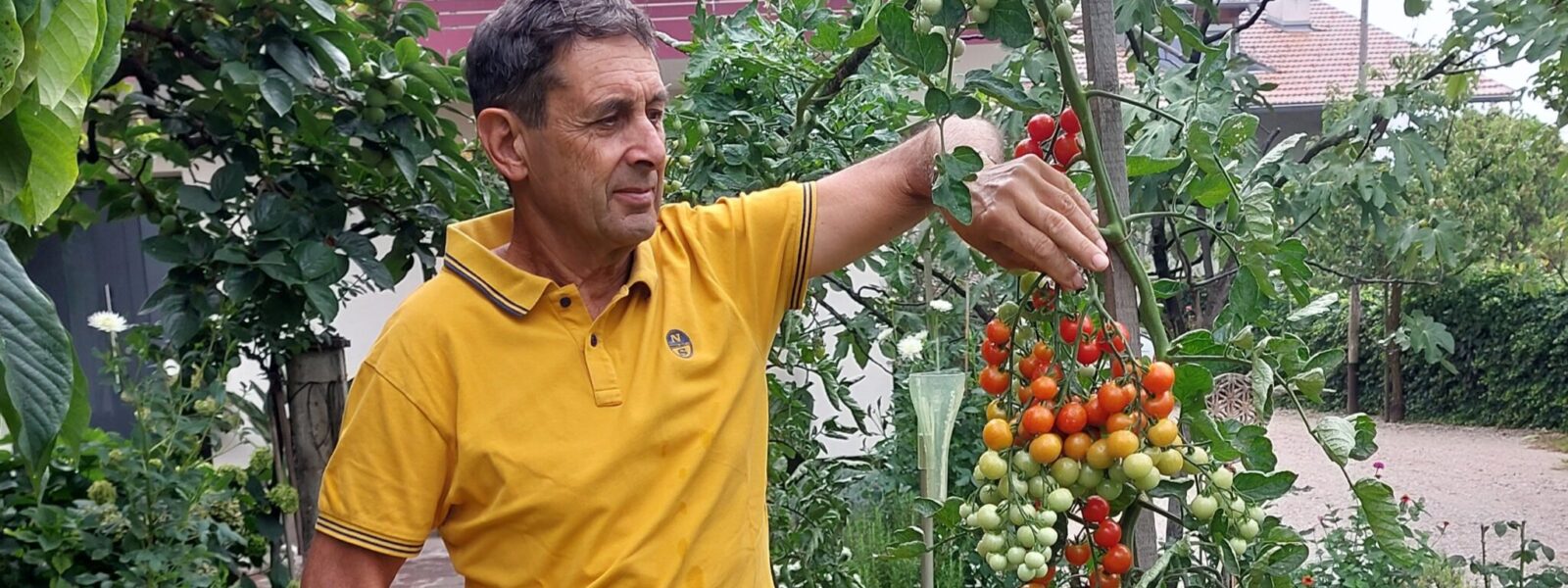
When you see Toni Kieser today in his garden, among apple trees, vines, and nearly a hundred tomato plants, it’s hard to believe that everything began with just three varieties: a few cherry tomatoes, some pelati, and a handful of “ordinary” ones.
More than twenty years ago, Toni could not have imagined what would grow from there. Today, he speaks about his tomatoes with a calm, almost detached voice – yet between the lines, you can clearly feel what drives him: a passion matured over time, rooted in the soil, in knowledge, and in patience.
Not a project – a process
„It happened by chance“,
Toni says. He got his first seeds at a farmers’ market – not in a supermarket, because: “What they sell there are often hybrids. You can’t reproduce them.” From the very beginning, it was clear: this was about collecting, preserving, passing on – not about selling.
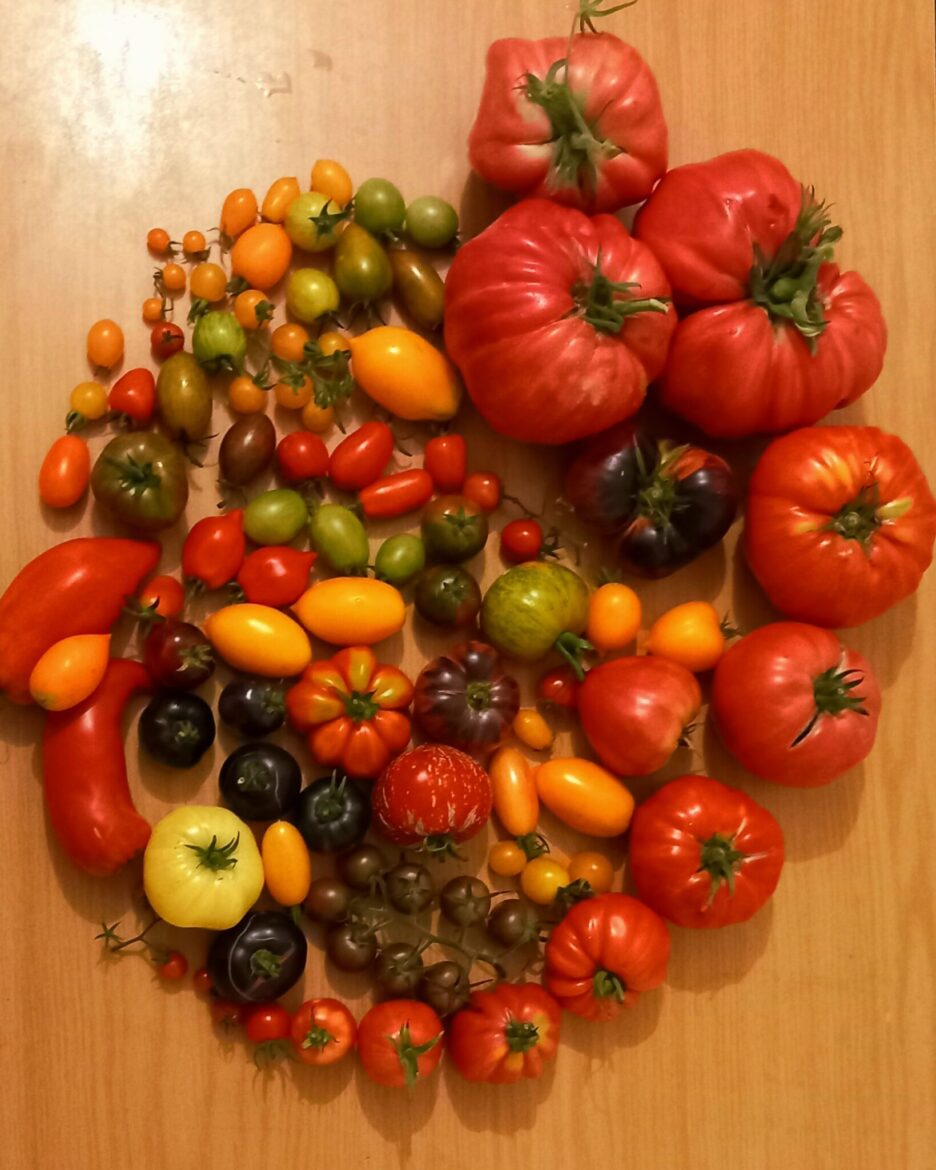
Today, tomatoes from every corner of the world grow in Toni’s garden: wild ones from Argentina, lemon-yellow, black varieties like Indigo Rose, ribbed from Amalfi, velvety from Nepal – from pea-sized to giants weighing 1.4 kilos. Each year, he plants about one hundred varieties, all open-pollinated, all with character. Some sweet, others tangy, many with names that sound like short stories: Feuerwerk. Imolese. Zuckertraube.
From the living room to the open field
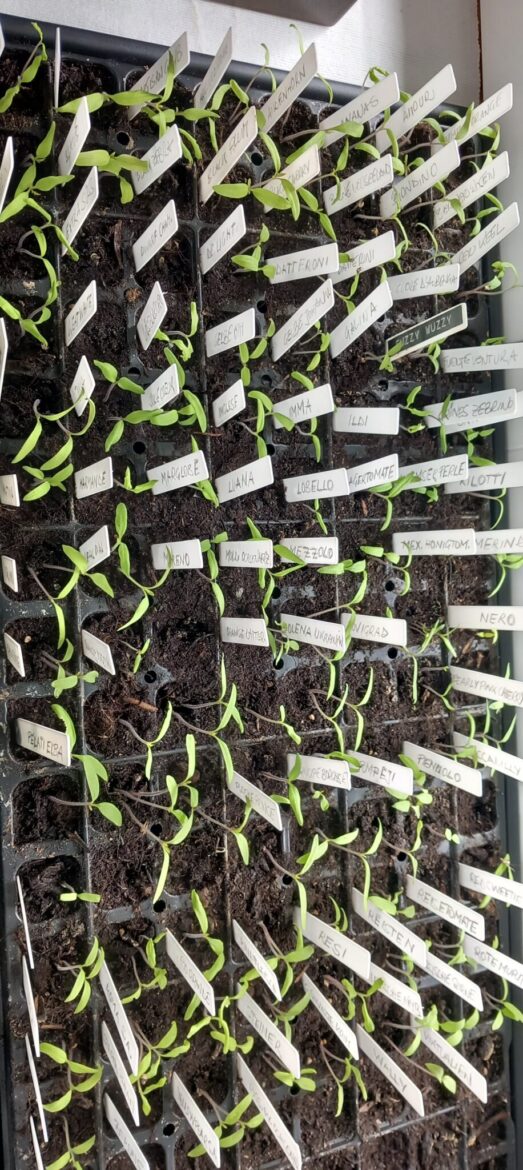
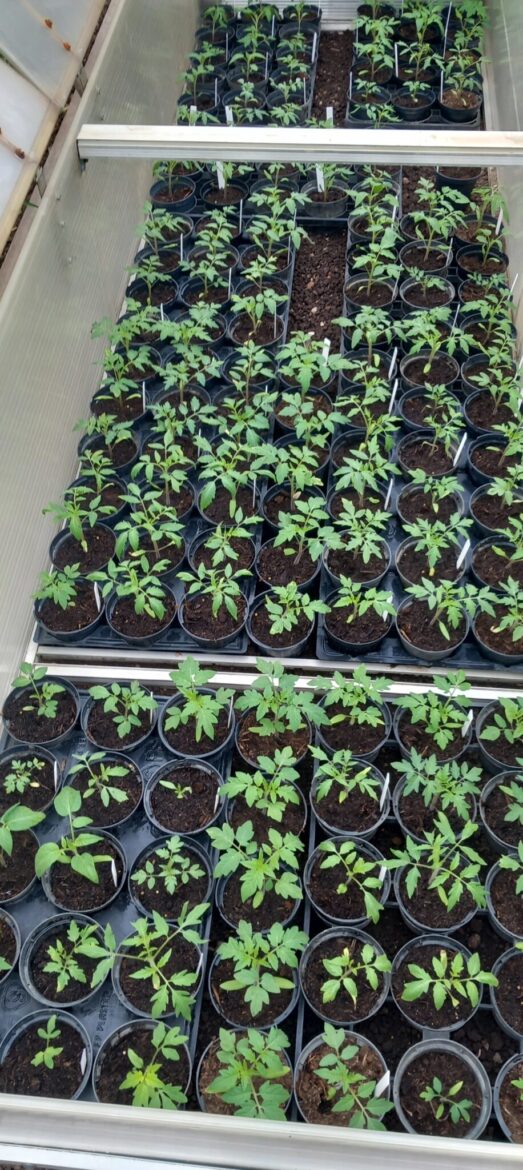
The work begins in March, when Toni starts sowing. Two or three seeds per variety go into small, labeled pots – “they all germinate,” he says, satisfied and assured. First they stay in the living room, then they move to the cold frame, and finally outside.
But only once the frost is gone.
„Tomatoes are delicate. Late frost or cold soil – they cannot endure it.“
By mid-May they can go out. By then, they stand about 25 cm tall, healthy, vigorous – and ready for what Toni calls “their life’s journey.”
Handwork with method
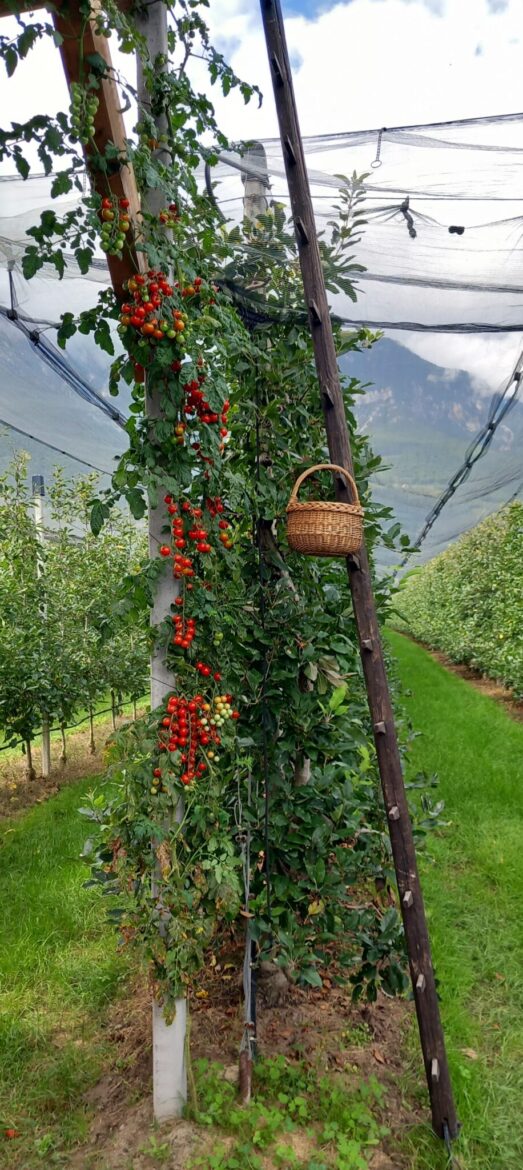
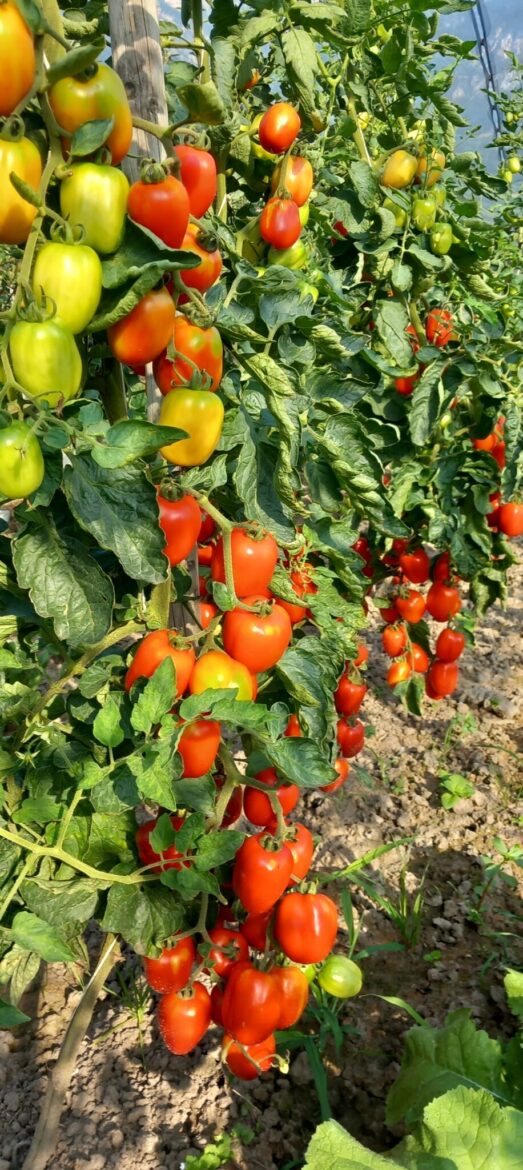
“The tomato needs a lot,” Toni says. Lots of light, lots of nutrients – but never water from above. That is why he built a structure with a transparent roof that lets in light but shields from rain and dampness. Irrigation comes by drip lines, keeping leaves and fruits dry – protection against fungal diseases.
Each plant is pruned by hand – freed from unnecessary shoots – and guided along the hanging cords of the homemade structure, where it climbs upward. The soil is tended and carefully fertilized. Harvesting is by hand – often with the “Loan” apple-picking ladder, since some plants grow up to six meters tall.
“The less water, the more flavor,” Toni says. And that is the goal: not quantity, but aroma. The small varieties are usually more intense, the large ones more fleshy.
„But each has its own season. And each shows you how it wants to be treated“
The man and the “Kaiser”
One of the strongest impulses for Toni came when he visited the garden of Erich & Priska Stekovics in Burgenland, Austria – a place where more than 3,000 tomato varieties are catalogued and documented. Not all grow at the same time, but the richness is palpable everywhere
„He gave guided tours, telling how each variety lives. That’s when I realized: this is more than a garden. This is a mission.“
Since then, Toni has continued collecting – not systematically, but by instinct. Whatever he comes across, he tries. What works, stays. What doesn’t, disappears. “I have no plan – but I have guiding principles.”
What remains
Toni Kieser is a farmer, not a romantic. He knows how much work goes into a good tomato – but he also knows what it gives back: diversity. Character. And sometimes: surprise.
And those who know him – or simply meet him – may leave with a few fruits in hand. Or with a small envelope of dried seeds, hand-labeled with names that sound almost like poems.
Because, as Toni says:
„You must give the plant what it needs. And then you will receive what you never expected.“
(Interview Erica Furini)
August 2025
Anton Kieser
Accommodation in Tramin
Ads
Available accommodation
 Vineus. New! Appartments, suites and rooms
 Urbanhof. Quiet place with pool.
 Hotel Pernhof. Suites & Apartments, restaurant, sauna
 Gartenheim. Quiet, central, breakfast under vines, pool & gar...
 Goldene Traube, Panorama & Überbacherhof. B&B, apart., re...